 AI
AI Introduction
For the past two years, the AI industry has talked mainly about chips. Whoever had the most GPUs, the argument went, would win. That framing is starting to look incomplete. AI electricity demand has grown so quickly that power, not processors, is becoming the binding constraint on how fast AI capacity can be built. The chain is straightforward: AI models require accelerators, accelerators sit in data centres, and data centres need electricity delivered reliably at a scale most local grids were never designed to absorb. Electricity consumption from data centres rose 17% globally in 2025, with AI-focused facilities surging 50%, according to the International Energy Agency. For leaders across technology, energy, real estate and finance, understanding this shift matters as much as understanding the chips themselves.
Key Takeaways
- Global data centre electricity consumption is projected to roughly double from 485 TWh in 2025 to 950 TWh by 2030, with AI-focused demand growing even faster than the average.
- The capital expenditure of the five largest technology companies on data centres exceeded $400 billion in 2025 and is expected to rise a further 75% in 2026.
- Grid connection queues in markets including the UK are becoming a genuine bottleneck, with some data centre projects facing multi-year waits for access.
- Major technology companies including Microsoft, Google, Amazon and Meta have signed a combined total exceeding 9 gigawatts of nuclear power agreements to secure reliable, low-carbon electricity.
- Power availability, alongside land and connectivity, is increasingly determining where new data centres get built, reshaping real estate and construction decisions.
- The story is genuinely global: the US, UK, EU and India are all grappling with data centre power demand, though at different scales and stages.
From Chips to Data Centres to Grids
The AI supply chain is often described as a straight line from model to chip. In practice, it runs further: AI models require training and inference workloads, which run on GPUs and other accelerators, which are installed inside data centres, which draw electricity from local grids that must generate, transmit and distribute that power reliably around the clock. Each link in that chain can become a bottleneck, and for much of the past two years the tightest link was chip supply. That constraint has eased somewhat as manufacturing capacity has expanded, while the electricity link has tightened. The IEA’s most recent analysis found that data centre electricity demand grew 17% in 2025, comfortably outpacing the 3% growth in overall global electricity demand, while AI-focused data centres alone saw consumption surge by 50%.
This matters because electricity infrastructure moves on a fundamentally different timeline to chip manufacturing. A new GPU generation can reach market in roughly a year. A new transmission line, substation upgrade or power plant can take three to ten years, depending on the technology and the regulatory environment. That mismatch between the pace of AI demand growth and the pace of physical grid buildout is the structural issue underlying the current AI electricity demand story.
How Much Electricity Does AI Actually Consume?
Quantifying AI’s specific share of data centre electricity use is genuinely difficult, since data centres also run cloud computing, storage and enterprise workloads unrelated to AI. What is measurable is the trajectory of the sector as a whole. The IEA projects global data centre electricity consumption will roughly double from 485 TWh in 2025 to around 950 TWh by 2030, representing close to 3% of global electricity demand. Its original Energy and AI report found generation could grow from roughly 460 TWh in 2024 to over 1,000 TWh by 2030 and 1,300 TWh by 2035 in its base case — a volume comparable to Japan’s entire current electricity consumption.
Efficiency gains are real and should not be dismissed. The IEA notes that energy use per individual AI task has fallen by at least an order of magnitude annually in recent years, with a simple text query now typically consuming less electricity than running a television for the same period. But those gains are being outpaced by growth in usage: major AI model providers reported roughly a threefold increase in active users and a fivefold increase in revenue over the past year, and this growing user base, combined with more computationally intensive uses such as autonomous AI agents, is driving total consumption upward even as efficiency per task improves.
Why AI Electricity Demand Is Reshaping Data Centre Construction
Data centre construction has become one of the largest categories of corporate capital spending anywhere in the world. The IEA found that capital expenditure by the five largest technology companies on data centre infrastructure surpassed $400 billion in 2025, projected to rise a further 75% in 2026. That investment is outpacing the ability of many grids to keep up. In the UK, data centre developers have requested roughly 50 gigawatts of transmission-level grid connection capacity — broadly equivalent to the country’s entire peak electricity demand — according to figures reported from the national grid connection queue, with some projects facing waits measured in years.
This dynamic is reshaping how and where data centres get sited. Land availability and network connectivity have always mattered for location decisions, but power availability and grid connection timelines are increasingly the deciding factor. GEBM’s earlier reporting on how rising data centre electricity costs are creating friction between hyperscalers and ratepayers captures one consequence directly: when demand outpaces available supply, someone has to absorb the cost, and that question is becoming genuinely contested. Equipment shortages compound the problem — GEBM’s coverage of the copper and transformer shortage now constraining data centre buildouts shows that even where grid capacity exists on paper, physical equipment bottlenecks can delay projects by years.
How Big Tech Is Responding
Google, Microsoft, Amazon and Meta have each pursued a broadly similar strategy: securing long-term, firm power supply directly, rather than relying solely on grid electricity purchased at market rates. Microsoft’s approach has centred on restarting existing nuclear capacity. In 2024, it signed a 20-year power purchase agreement with Constellation Energy to restart the Three Mile Island Unit 1 reactor, since renamed the Crane Clean Energy Center, in a roughly $1.6 billion project now targeting full output by 2027, a year ahead of the original schedule.
Google has taken a different route, betting on next-generation reactor technology. Its 2024 agreement with Kairos Power committed to developing up to 500 megawatts of advanced nuclear capacity by 2035, with the first small modular reactor targeted for 2030. Amazon has pursued nuclear offtake agreements and direct investment in nuclear-adjacent infrastructure, including an expanded agreement tied to the Susquehanna Steam Electric Station. Meta has moved most aggressively on volume, announcing agreements covering up to 6.6 gigawatts of nuclear capacity across multiple developers. Collectively, the major hyperscalers have now signed more than 9 gigawatts of nuclear power agreements, alongside continued heavy investment in wind, solar and battery storage. GEBM’s broader look at why power, not talent, has become AI’s real constraint traces how this shift in corporate strategy has unfolded across the sector.
Comparison Table: Power Sources for AI Data Centres
| Power Source | Reliability | Typical Timeline | Carbon Profile | Current Role |
|---|---|---|---|---|
| Natural gas | High, dispatchable | Months to a few years | High | Meets over 40% of near-term additional demand alongside coal |
| Existing nuclear restarts | Very high, 24/7 baseload | 2–4 years | Very low | Microsoft’s Three Mile Island deal is the flagship example |
| Small modular reactors (SMRs) | Very high once operational | 5–10+ years | Very low | Early-stage; first units expected around 2030 |
| Solar and wind | Variable, weather-dependent | 1–3 years | Very low | Fastest-growing source, meeting nearly half of demand growth to 2030 |
| Grid electricity (mixed) | Depends on local grid | Immediate but capacity-constrained | Varies by region | Default source, increasingly supply-constrained in hotspot regions |
Why Nuclear Is Attracting Attention, and Its Limits
Nuclear power’s appeal for AI infrastructure is straightforward: it offers reliable, round-the-clock, low-carbon electricity at a scale that intermittent renewables cannot match on their own without substantial storage. That reliability is precisely what large AI training clusters need, since they typically run continuously rather than following the variable output pattern of solar or wind. Deloitte’s analysis of the sector suggests nuclear could meet up to 10% of data centre electricity demand by 2035 — a meaningful but not dominant share.
The limits are equally real. Restarting an existing reactor, as Microsoft has done, is measured in years; building a new small modular reactor at commercial scale is a longer undertaking still, with the first units not expected online until around 2030. Regulatory approval processes, construction cost overruns and public perception following historical accidents all remain genuine friction points. Nuclear is best understood as one component of a diversified power strategy rather than a near-term solution to today’s grid constraints, which is why hyperscalers continue pursuing gas, wind, solar and grid upgrades simultaneously rather than waiting for nuclear capacity to materialise.
A Global Story, Not Just a US One
The AI electricity story is frequently told as an American phenomenon, but the pressure is genuinely international. In the UK, data centres have been designated Critical National Infrastructure, and the government’s AI Growth Zones policy now offers priority grid connections to qualifying sites, while the broader connection queue remains under significant strain. Across the European Union, the IEA projects electricity demand will grow at an average annual rate of 2.3% out to 2030, with data centres a contributing factor alongside electrification and cooling demand. India presents a different profile: peak electricity load has already risen from 162 gigawatts in 2017 to 250 gigawatts in 2024, driven substantially by cooling and agricultural demand, with data centre growth adding a further call on a grid expanding rapidly but from a lower base. GEBM’s wider coverage of the global infrastructure buildout underpinning the AI era sets this power question within the broader context of chips, capital and construction racing in parallel across multiple regions.
Common Mistakes Organisations Make
Treating power procurement as an afterthought to chip procurement. Securing GPU supply without a corresponding power and grid connection strategy simply shifts the bottleneck rather than resolving it.
Underestimating grid connection timelines. Assuming electricity will be available on the same timeline as construction financing has left several high-profile data centre projects stalled for years.
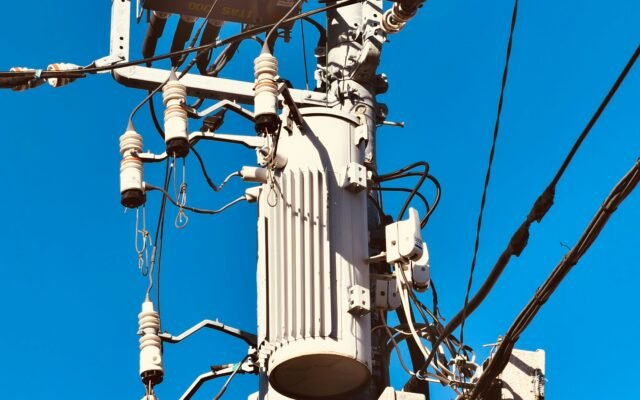
Overlooking equipment supply chains beyond generation. Transformers, switchgear and high-voltage cabling face their own shortages independent of raw generation capacity.
Assuming nuclear solves near-term demand. Nuclear capacity additions typically arrive on a multi-year horizon and cannot address shortfalls needed within the next one to three years.
Ignoring the cost-allocation question. Rising data centre electricity demand is beginning to raise questions in several markets about whether costs fall on hyperscalers, ratepayers, or some blend of both.
Future Trends: The Next Three to Five Years
Expect power procurement to become as central to AI strategy as chip procurement has been over the past two years. Diversified power portfolios combining gas, renewables, grid upgrades and nuclear commitments are likely to become standard practice among hyperscalers, rather than the more opportunistic approach seen so far. Grid operators and regulators are likely to develop more structured frameworks for prioritising and pricing large new industrial loads, following the UK’s early steps with AI Growth Zones. Real estate and infrastructure investors are likely to place growing weight on power availability and grid connection status when evaluating data centre sites, treating them as comparable in importance to land cost and fibre connectivity. Small modular reactor technology should begin producing its first operational data by around 2030, providing the sector’s first real evidence of whether SMR economics can scale as hoped. Utilities and power generation companies stand to benefit from sustained demand growth, though they will also face pressure to manage investment pace carefully, given the multi-decade asset lives involved in new generation capacity.
Frequently Asked Questions
Why is electricity becoming a bigger constraint on AI than chip supply? Chip manufacturing capacity has expanded significantly, while new electricity infrastructure — transmission lines, substations and power plants — takes considerably longer to build, typically three to ten years, creating a widening gap between AI demand growth and available power supply.
How much electricity do data centres currently consume globally? The IEA estimates global data centre electricity consumption at around 485 TWh in 2025, projected to reach roughly 950 TWh by 2030, close to 3% of global electricity demand, with AI-focused data centres growing considerably faster than the sector average.
Why are Microsoft, Google, Amazon and Meta signing nuclear power deals? Nuclear power offers reliable, round-the-clock, low-carbon electricity at a scale that matches how AI training clusters typically operate, unlike intermittent renewables, making it attractive despite long construction and restart timelines.
Will nuclear power solve the AI electricity shortage? Not in the near term. Nuclear restarts take several years and new small modular reactors are not expected to reach commercial operation until around 2030, meaning nuclear is part of a diversified long-term strategy rather than an immediate fix.
Which countries face the biggest AI-driven electricity pressure? The US currently has the largest data centre footprint by electricity consumption, but the UK, European Union and India are all experiencing significant grid pressure from data centre growth, shaped by different underlying demand drivers.
How is data centre electricity demand affecting where new facilities are built? Power availability and grid connection timelines are increasingly as important as land cost and network connectivity in site selection, with developers favouring locations offering faster access or the ability to build dedicated infrastructure.
Could rising AI electricity demand increase household energy bills? It is a live concern in some markets, particularly where large new industrial loads strain local grid capacity, though policy responses such as the UK’s AI Growth Zones aim to structure costs so they do not fall directly on households.
Final Thoughts
The shift from chips to electricity as AI’s defining constraint does not mean the chip race is over, but it does mean the story has become more complicated, and more physical. Silicon can be manufactured faster than transmission lines can be built, and that mismatch is now shaping decisions across technology, energy, real estate and finance simultaneously. What is emerging is not a crisis so much as a genuine infrastructure challenge, one that will be resolved gradually through diversified power procurement, grid modernisation and, in time, new generation capacity coming online. The organisations that treat AI electricity demand as a core strategic input, rather than a downstream engineering problem, are likely to be the ones that build AI capacity fastest over the coming years.