 AI
AI
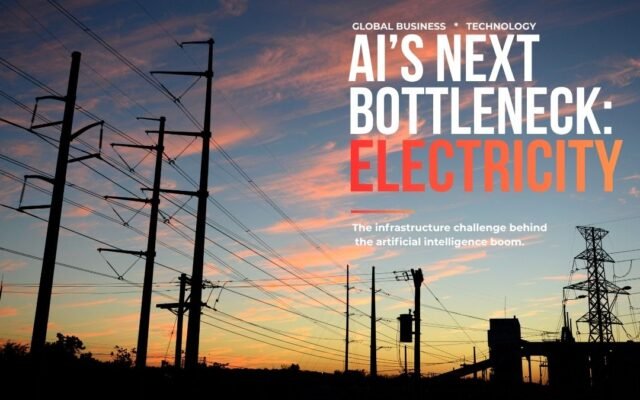
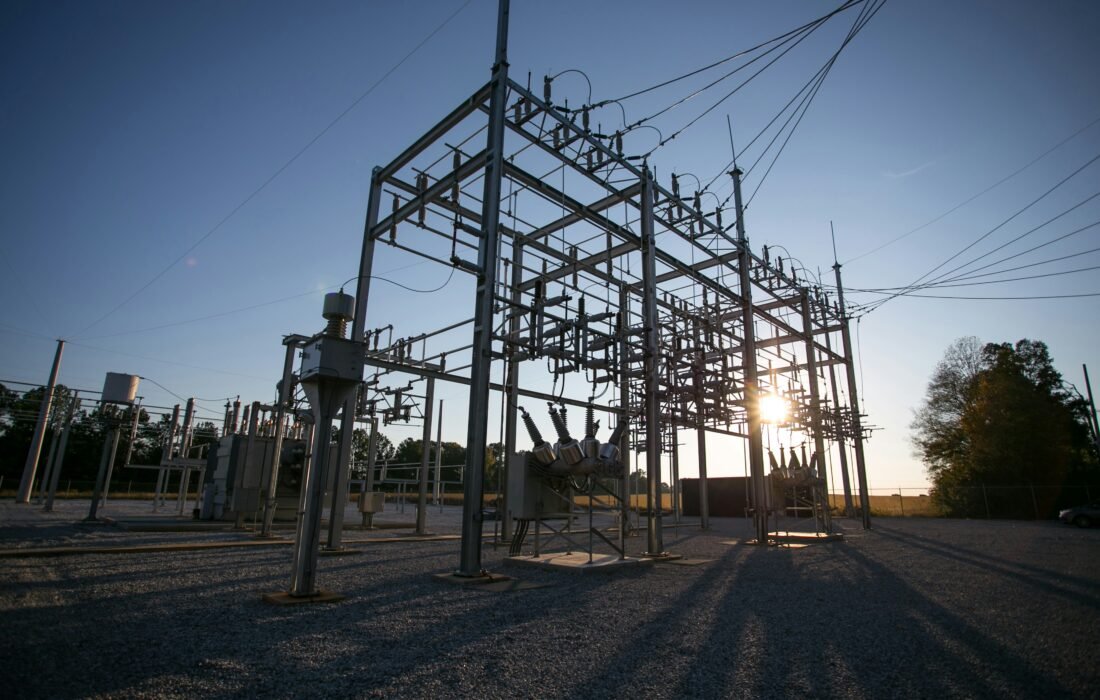
The data center transformer shortage now rippling through the AI industry didn’t start with transformers at all. Follow the AI infrastructure story far enough and the constraint keeps moving. First it was GPUs. Then it was electricity — the subject of this magazine’s last feature on the global race to secure gigawatts of power. Follow it one step further and the constraint isn’t electricity either. It’s the physical hardware that carries that electricity from a power plant to a server rack: transformers, switchgear, and the copper and steel they’re made from.
This is the layer almost nobody outside the industry watches, and it may be the tightest constraint of all. A data center can be built in two to three years. A large power transformer, as of mid-2026, routinely takes longer than that to arrive — and in the worst cases, longer than the data center itself.
1. Why a transformer takes longer to build than the building around it
Lead times on large power transformers have roughly doubled since the early 2020s, and the most authoritative tracker of the trend — Wood Mackenzie’s quarterly transformer market survey — puts standard power transformers at an average 128 weeks for delivery as of its most recent read, generator step-up transformers (the units that connect a power plant to the grid) at around 144 weeks, and substation transformers above 160 weeks in its 2026 data. Some specialised orders now run past four years. Wood Mackenzie’s Q2 2025 survey found demand for generator step-up units has grown 274% since 2019, and demand for substation power transformers is up 116% over the same period — far outpacing the industry’s ability to add capacity. This is the mechanical core of the data center transformer shortage: demand accelerating several times faster than supply can physically follow.
The United States is especially exposed. The Department of Energy’s own resilience report to Congress found the US imported 82% of the large power transformers it used in 2019 (617 of 754 units), and that domestic manufacturers’ maximum theoretical output — even running flat out — is around 343 units a year. In practice the industry runs at roughly 40% of that.
The instinctive assumption is that this is simply a factory-capacity problem — build more plants, hire more workers, done. It isn’t that simple, and three separate constraints are stacked on top of each other:
Grain-oriented electrical steel. Transformers require a specific, highly engineered steel (GOES, sometimes called CRGO) that is itself in short supply — see below. No steel, no transformer, regardless of factory capacity.
Skilled labour. Winding insulated copper coils inside a transformer core cannot be meaningfully automated. Industry sources describe it as closer to a craft than a manufacturing step, and even manufacturers with adequate steel supply report they simply can’t find enough trained coil-winders to run their lines at capacity.
Bushings and insulators. These smaller components are reported to be in acute shortage alongside the steel itself, and a transformer missing any one input doesn’t ship.
That combination is why capital alone doesn’t fix the problem quickly. New production lines take years to build and additional years to staff and train, which is why the wave of expansion investment announced in 2024–2026 is not expected to meaningfully ease the market before 2027–2029.
2. The steel behind the steel
One layer deeper than the transformer shortage sits an even narrower one: the market for grain-oriented electrical steel itself. Global GOES production is concentrated among a small handful of producers — China’s Baosteel, Japan’s JFE Steel and Nippon Steel, South Korea’s POSCO, and Germany’s Thyssenkrupp are the names that recur most consistently in industry market-research coverage — against surging demand from grid buildout, offshore wind, EVs, and now AI data centres simultaneously. Precise global capacity and market-share figures for this market are not consistently published and should be treated with caution wherever a specific number appears in secondary coverage.
In the United States, Cleveland-Cliffs is the sole domestic GOES producer, manufacturing at its Butler Works mill in Pennsylvania (formerly AK Steel). A roughly $75 million Department of Energy-funded expansion there is on track for 2028 — which tells you something on its own about the realistic timeline for this shortage to ease. India offers a useful illustration of how tight this market is globally: a Global Trade Research Initiative analysis found domestic Indian CRGO production covered only about 70% of the roughly 400,000 tonnes the country needed in one recent fiscal year, a 30%-plus shortfall that trade data suggests is continuing amid ongoing import licensing delays. Multiple industry analysts, including Citi Research, have pointed to high-voltage transformer supply shortfalls persisting through 2028–2029, though the specific “2029” endpoint circulates more reliably through industry commentary than through one single, citable primary forecast.
3. The copper math
Copper is the other input everyone assumed was a solved problem. It isn’t. Goldman Sachs projects that grid and power infrastructure alone will drive more than 60% of global copper demand growth through 2030 — before accounting for the copper used inside data centres themselves, in EVs, or in renewable generation, all of which are scaling at the same time. Goldman describes the incremental demand this creates as equivalent to adding another United States’ worth of copper consumption to the global market.
Supply cannot simply scale to meet it. New copper mines take ten to twenty years to go from discovery to production, and the last decade saw chronic underinvestment in new capacity. Two recent, concrete supply shocks illustrate how fragile the pipeline already is: Ivanhoe Mines’ Kamoa-Kakula project in the Democratic Republic of Congo — one of the world’s largest copper mines — was hit by seismic activity and flooding in May 2025 that forced the company to cut its 2025 guidance by roughly 28% (to 370,000–420,000 tonnes) and withdraw its 2026 production target entirely while it assessed the damage; Ivanhoe reported no fatalities from the incident. Separately, First Quantum’s Cobre Panama mine, representing roughly 1% of global copper supply on its own, has been shut since Panama’s Supreme Court ruled its mining concession unconstitutional in November 2023, with formal restart negotiations not expected before late 2026 or 2027 at the earliest.
There’s a geopolitical layer here too, and it doesn’t run through mining — it runs through refining. China is not the largest copper-mining country, but it refines roughly half of the world’s copper: Chinese cathode output crossed 13.6 million tonnes in 2025, about 47% of global refined output. That gives Beijing outsized influence over the finished input every transformer and cable manufacturer actually needs, independent of where the raw ore comes from.
The price and inventory picture is genuinely mixed, which is worth stating plainly rather than picking whichever number fits a narrative: 2026 price forecasts range from roughly $10,700 to $12,600 a tonne depending on the forecaster, and LME visible inventories actually hit an eight-year high in mid-2026 even as prices sat near record levels — a signal of near-term physical looseness that sits uneasily next to the longer-run structural deficit (a cumulative shortfall of roughly 3 million tonnes projected by 2036) that dominates the analyst narrative. Both things can be true at once: comfortable today, tight for the rest of the decade.
Contested claim
Is the shortage really canceling half of next year’s data centers?
Is the shortage really canceling half of next year’s data centers?
4. Is this actually as bad as the headlines say?
Here the story gets genuinely contested, and a responsible business readership should see the disagreement rather than a settled number. Through the first half of 2026, a widely repeated claim circulated that 30–50% of the roughly 16 GW of US data centre capacity announced for 2026 would be delayed or cancelled specifically because of transformer and switchgear shortages. The figure traces back to an April 1, 2026 Bloomberg report, which was then amplified into more alarming headlines across several technology outlets.
In June 2026, the AI-infrastructure research firm SemiAnalysis published a detailed rebuttal, arguing the panic narrative was substantially a product of AI-aggregated tools scraping press releases and treating early-stage, unfinanced, unpermitted project announcements as if they were committed 2026 capacity — then reporting their inevitable non-arrival as a “cancellation.” SemiAnalysis says its own capacity forecast moved by only about 1% over the same period, and that satellite imagery shows the two largest hyperscalers alone already have more than 5 GW of self-built capacity under physical construction.
That doesn’t mean nothing has happened — it means the evidence is messier and more ambiguous than the headline figure suggests. In an earlier, separate episode in early 2025, Microsoft slowed or paused early-stage capacity plans and let go of leases with a couple of private data centre operators; analysts at TD Cowen covering that specific episode attributed it primarily to Microsoft rebalancing an oversupply position after the OpenAI-Oracle Stargate deal reshaped its own build plans — a demand-side explanation, not evidence of a supply-chain shortage biting. That episode is a useful reminder to separate the two different stories that keep getting merged in coverage: real, well-documented physical shortages in transformers and steel, and ordinary demand-side project reshuffling that has nothing to do with copper or steel at all.
The honest read: the underlying shortage in transformers, GOES steel, and switchgear is real, well-documented, and structurally unlikely to resolve before 2028–2029. Whether it is currently the binding constraint on half of next year’s announced capacity, versus a convenient explanation layered onto ordinary project-planning attrition, is a live and unresolved argument — and worth watching rather than citing as settled fact.
5. Who wins: the new chokepoint gatekeepers
Whichever reading is closer to correct, the companies sitting on the physical chokepoints behind the data center transformer shortage are capturing extraordinary pricing power and locking in demand years in advance.
| Company | Chokepoint | What they’re doing about it |
|---|---|---|
| Hitachi Energy | Large power transformers | Roughly $4.5B in cumulative global capacity investment targeted through 2027, including a $457M plant in South Boston, Virginia (aiming to be the largest large-power-transformer plant in the US by 2028) and a $106M critical-components expansion in Alamo, Tennessee. |
| GE Vernova | North American transformer manufacturing | Completed a $5.275B buyout of the remaining 50% of its Prolec GE joint venture in February 2026, taking full control of seven plants and ~10,000 employees to secure transformer capacity outright. Total company order backlog reached roughly $176B by Q2 2026. |
| Siemens Energy | Transformers, grid equipment | Expanding US manufacturing footprint, including a roughly $421M investment in a Charlotte, North Carolina transformer facility. |
| Cleveland-Cliffs | Grain-oriented electrical steel (sole US producer) | DOE-funded capacity expansion (~$75M) at its Butler Works, Pennsylvania mill, on schedule for 2028. |
| Baosteel / Nippon Steel / JFE Steel / POSCO / Thyssenkrupp | Global GOES supply (concentrated among a handful of producers) | Incremental capacity additions reported across producers, but additions are slow relative to demand growth; precise capacity/share figures are not consistently published. |
| Codelco, BHP, Freeport-McMoRan | Copper mining | Codelco remains the largest single copper miner by output despite an 8–10% production decline in early 2026 (grade deterioration plus the aftermath of a 2025 fatal accident at its El Teniente mine); new supply industry-wide is dominated by brownfield expansion of existing mines rather than new discoveries, given 10–20 year development timelines. |
| Chinese smelters (state and private) | Copper refining (~50% of global output) | Adding roughly 2.5 million tonnes of refining capacity 2025–2028, while agreeing to voluntary output cuts in 2026 to manage smelter overcapacity and margins — though multiple analysts note limited actual follow-through on those voluntary cuts in practice, a reminder that China can tighten this chokepoint more easily than the industry can loosen it. |
6. The workaround: going around the grid entirely
The most consequential response to the data center transformer shortage isn’t waiting in line for a transformer. It’s routing around the grid altogether by building dedicated, on-site power generation — almost always natural gas — directly at the data centre.
xAI’s Memphis “Colossus” facility installed its own on-site gas turbines and reportedly reached deployment in around 122 days, a fraction of a normal grid-interconnection timeline. Meta has gone further: it is funding utility Entergy to build ten dedicated gas plants (a combined ~7.5 GW) to power its Richland Parish, Louisiana campus — three already approved totalling 2.26 GW, with seven more announced in a March 2026 deal — backed by a $6 billion Entergy investment in supporting transmission and a 20-year gas supply agreement with Energy Transfer. Oracle’s Stargate build-out has deployed roughly 2.3 GW of modular on-site gas generation via VoltaGrid, announced in October 2025 and described by industry analysts as the first large-scale commercial validation of gas as primary (not backup) data-centre power. And in June 2026, Chevron and GE Vernova announced a 20-year deal to power a 2.67 GW Microsoft data centre in West Texas (“Project Kilby”), with a final investment decision expected by the end of 2026 — oil majors becoming power-plant operators for the AI industry, with ExxonMobil pursuing a similar model paired with carbon capture.
The scale of this shift is significant on its own, though the exact figures vary by tracker: estimates for behind-the-meter gas capacity tied to AI data centres range from roughly 33 GW forecast by 2030 in some bank analyses to over 80 GW of cumulative announcements since 2025 in broader industry trackers — a wide range that reflects how new and fast-moving this market is, but the direction is unambiguous. OpenAI’s Stargate programme alone has targeted 10 GW of capacity, much of it behind-the-meter, and it is effectively a second, private power grid being built in parallel with the public one — funded not by utilities and ratepayers but by the AI industry itself.
What’s notably absent so far: clear public evidence of hyperscalers moving further upstream, into copper mining or GOES steel production directly, the way they’ve moved into gas generation and, more quietly, into pre-buying transformer capacity years ahead of construction through direct manufacturer agreements. That may be the next chokepoint worth watching — not because it’s happening yet, but because the logic that pushed Meta and Oracle into owning power plants points the same direction one layer further down the supply chain.
Methodology note: this piece draws on Wood Mackenzie’s transformer lead-time survey, the US Department of Energy’s Large Power Transformer Resilience Report to Congress, Goldman Sachs commodity research, company press releases and SEC/investor disclosures, and reporting from Bloomberg, SemiAnalysis, Data Center Dynamics, ENR, and other trade press. This draft has been through one independent fact-check pass; that pass corrected a false fatality claim, a misdated and misattributed Microsoft example, a fabricated market-share statistic, a stale backlog figure, and an unsupported company-attribution detail, and flagged several date-range and consensus claims as resting on secondary rather than primary sourcing. Given the pace of new announcements in this market, treat all figures as a snapshot as of August 2026.
The AI industry has spent two years chasing chips, then electricity. The next constraint down the chain isn’t digital at all — it’s a fifty-year-old technology built from steel and copper wire, and right now, it’s arguably the hardest thing in the entire AI boom to actually buy.