
Warren Buffett’s departure as CEO marks the close of one of the most influential leadership eras in modern business.
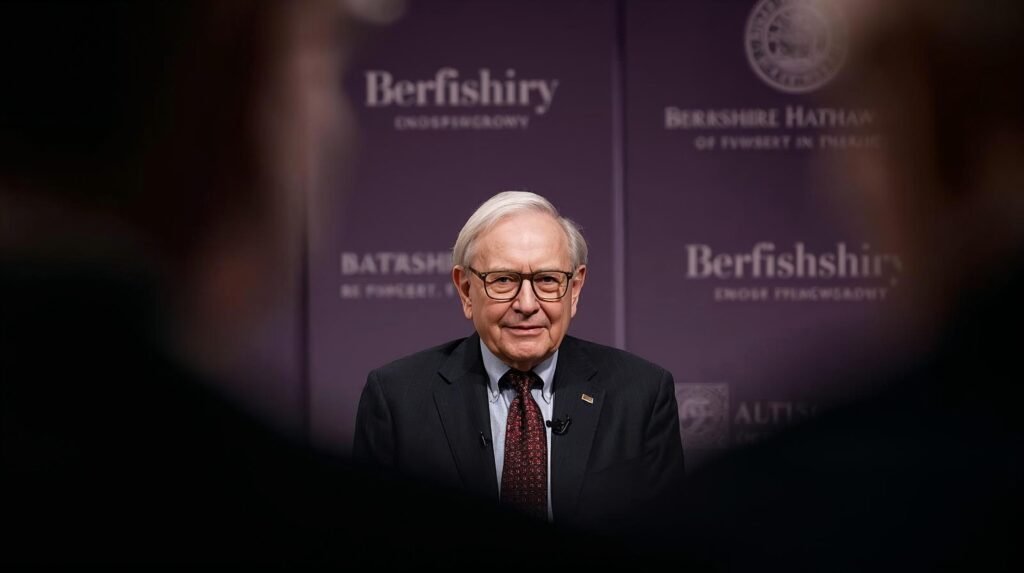
The business world rarely pauses for individual departures, but Warren Buffett’s final day as chief executive of Berkshire Hathaway has prompted exactly that. After more than half a century at the helm, the 93-year-old investor’s exit marks the close of one of the most influential leadership chapters in modern corporate history. For markets, shareholders and executives alike, it is not merely a retirement, but a symbolic handover from an era defined by patience, discipline and personality-driven capitalism.
Buffett’s tenure transformed Berkshire Hathaway from a struggling New England textile manufacturer into a $700 billion conglomerate spanning insurance, railways, energy, consumer brands and a formidable equities portfolio. Along the way, he became the most recognisable investor in the world, admired not only for his returns but for the clarity and consistency of his philosophy. His final day as CEO invites reflection on what made Berkshire unique, and what may change now that its founder steps aside.
At the core of Buffett’s success was a deceptively simple approach: buy high-quality businesses, run by capable managers, at sensible prices, and hold them for the long term. This philosophy stood in contrast to the increasingly frenetic pace of financial markets, dominated by quarterly earnings pressures and short-term trading strategies. Berkshire’s structure, which allowed operating companies to run autonomously while benefiting from centralised capital allocation, became a case study in decentralised management.
Equally significant was Buffett’s role as a communicator. His annual letters to shareholders evolved into essential reading for investors, executives and policymakers, offering insights not only into Berkshire’s performance but into broader economic and corporate trends. Written in plain language and often laced with humour, they reinforced his reputation as a steward of shareholder capital rather than a financial engineer.
The transition now underway has long been anticipated. Buffett has spent years preparing investors for a future without him, repeatedly emphasising that Berkshire is built to endure beyond any one individual. Day-to-day operations have already been distributed among senior executives, while investment responsibilities have gradually shifted to a new generation of portfolio managers. The succession plan, though closely guarded in its details, has been designed to minimise disruption.
Still, the psychological impact of Buffett’s departure should not be underestimated. For many shareholders, Berkshire’s appeal was inseparable from trust in its leader. Buffett was not just a CEO but a cultural anchor, embodying values of prudence, integrity and long-term thinking. His presence provided reassurance during crises, from the global financial meltdown to pandemic-era volatility, when markets looked to Omaha for signals of confidence or caution.
The immediate question for investors is whether Berkshire can maintain its distinct identity without its founder. Structurally, little changes overnight. The company’s vast insurance operations continue to generate reliable cash flows, while core holdings such as railroads, utilities and consumer brands provide steady earnings. The balance sheet remains conservatively managed, with significant liquidity and limited leverage.
More subtle, however, is the challenge of capital allocation at scale. As Berkshire has grown, deploying capital efficiently has become increasingly difficult, a reality Buffett himself frequently acknowledged. Future leadership will need to navigate an environment where opportunities of sufficient size are rarer, competition is more intense and technological disruption moves faster than in previous decades.
There is also the broader question of philosophy. While Berkshire’s successors are expected to adhere to Buffett’s principles, markets will test whether those principles can be applied with the same conviction in a very different economic landscape. Higher interest rates, shifting global supply chains and the rise of technology-driven business models present complexities that were less prominent during much of Buffett’s career.
From a governance perspective, Buffett’s exit places greater emphasis on institutional strength rather than individual judgement. Berkshire’s board, management teams and internal controls will now carry the weight of maintaining investor confidence. This transition mirrors a wider shift in corporate America, where founder-led narratives are increasingly giving way to system-led leadership.
Internationally, Buffett’s influence extended well beyond the United States. His views on inflation, trade, regulation and capitalism were closely followed by policymakers and business leaders across Europe and Asia. In the UK, his long-standing investments and public commentary resonated with advocates of patient capital and value-based investing, offering a counterpoint to more speculative market trends.
It is also worth noting that Buffett’s departure comes at a time of generational change in global finance. As artificial intelligence, algorithmic trading and private capital reshape markets, the image of an investor relying on annual reports, instinct and long-term conviction feels increasingly anachronistic. Yet that contrast may be precisely why Buffett’s legacy endures. His career serves as a reminder that fundamentals, governance and trust remain central to value creation.
Berkshire Hathaway now enters a new chapter, defined less by personality and more by process. The company’s sheer size and diversity mean it will remain a significant force in global markets, regardless of who occupies the corner office. But the emotional bond between founder and shareholder, forged over decades of shared success, cannot be replicated.
As Warren Buffett steps away from the CEO role, the sense of an ending is unavoidable. Not because Berkshire’s prospects suddenly dim, but because a distinctive model of leadership, built on credibility earned over time, passes into history. What follows will be closely watched, not just for its financial outcomes, but for what it reveals about how enduring institutions adapt when their defining figure finally lets go.
Source:
Editorial analysis based on current global reporting and industry developments related to the topic.