
The Global Ripple Effect
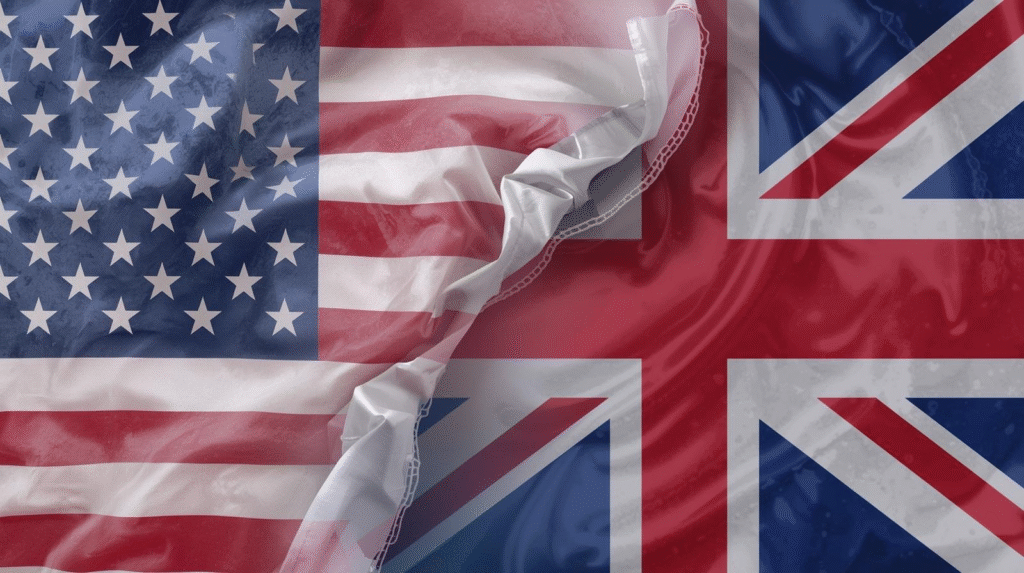
When the U.S. government raised tariffs on a range of imports earlier this year, few anticipated how swiftly the tremors would reach the United Kingdom. But according to Bank of England policymaker Swati Dhingra, the repercussions are already visible — slowing growth, cooling inflation, and complicating Britain’s post-Brexit recovery.
“Tariffs act as a drag on global growth,” Dhingra said during a recent address in Dublin. “The disruption to trade means lower overall growth — and some downward pressure on prices in the medium term.” (Reuters, Oct 23 2025)
Her comments underscore how deeply intertwined the UK’s fortunes are with U.S. economic policy, even as London seeks to reassert itself as a global trading hub outside the European Union.
A Fragile Recovery Under Strain
The UK economy, already burdened by high interest rates and weak productivity, is now confronting another layer of uncertainty. The IMF’s October 2025 World Economic Outlook trimmed Britain’s growth expectations to 1.1% for 2025, warning that the country faces the highest inflation rate among the G7 for a second consecutive year (The Guardian, Oct 14 2025).
Protectionist policies in Washington are exacerbating that fragility. The higher cost of imports from Europe and Asia is slowing global trade volumes — which, in turn, weakens demand for UK goods and services.
“Weaker demand from U.S. trading partners spills over into lower exports and slower investment here at home,” notes economist Vicky Pryce of the Centre for Economics and Business Research. “The UK is collateral damage in a tariff-driven slowdown.”
Brexit’s Lingering Shadow
Britain’s economic foundation was already eroded by Brexit-related trade barriers. Dhingra cited research showing that services most exposed to EU restrictions have seen a 16% fall in exports, with overall GDP estimated to be 6–8% lower than if the country had remained in the EU.
The Office for Budget Responsibility estimates Brexit will leave the UK 4% less productive in the long term.
Combined with tariff shocks, these losses compound an already worrying productivity gap. “Brexit demonstrated the corrosive effect of policy uncertainty on trade and investment,” Dhingra warned — and tariffs threaten to repeat that story on a global scale.
The Monetary Policy Tightrope
Ironically, the same tariffs dampening growth may temporarily lower inflation, offering short-term relief to British consumers. Dhingra argued that tariffs “could bring some downward pressure on prices in the medium term,” as reduced demand cools the economy.
However, she cautioned against keeping interest rates too high for too long, saying that restrictive policy might choke investment in new capacity and innovation — both critical to reversing Britain’s productivity slump.
Her stance contrasts with that of more hawkish members of the Bank’s Monetary Policy Committee, who argue that premature easing risks reigniting inflation. The tension highlights the Bank’s delicate balancing act: protecting growth without undermining price stability.
A Warning from History
BoE Governor Andrew Bailey, speaking recently in Washington, likened the current tariff wave to Brexit — “a warning to the world economy about the impact of trade barriers.” (Reuters)
That warning comes at a moment when global business confidence has already plunged. A report from Consultancy UK found that executives’ confidence dropped to its lowest level in two years as “tariff threats sabotage global recovery prospects.”
In essence, protectionism breeds uncertainty — and uncertainty is poison to investment. When firms are unsure of supply-chain stability or future trade costs, they defer expansion, hiring, and innovation.
Strategic Lessons for Business Leaders
For British business leaders, the message is clear: adaptability is survival.
Executives across manufacturing, logistics, and finance must treat trade friction as a strategic risk variable, not a short-term political story. The winners will be those who:
- Diversify markets: Reduce dependence on U.S.- or EU-centric supply chains.
- Invest in resilience: Near-shore critical components, digitize operations, and hedge against currency volatility.
- Leverage policy support: Tap into UK Export Finance and other post-Brexit trade schemes to access growth markets in Asia and the Gulf.
- Engage in scenario planning: Model tariff-related cost shocks and their impact on margins and pricing power.
Forward-looking CFOs are already running tariff-stress scenarios as part of their 2026 planning cycles — a practice likely to become standard in boardrooms.
Outlook: A Re-Globalizing World?
Despite gloomy headlines, the broader picture is not one of inevitable decline. The IMF projects global GDP growth of 2.9% in 2025, suggesting resilience amid shocks. However, the distribution of that growth will shift toward economies less exposed to trade barriers — notably India, Southeast Asia, and parts of the Middle East.
For the UK, the challenge is to reposition itself within this re-globalizing landscape: forging new bilateral deals, supporting high-tech exports, and nurturing a skilled workforce. Tariffs may be temporary, but competitiveness is permanent.
As Dhingra concluded in her Dublin remarks:
“The lesson from Brexit and the current tariff cycle is that open, predictable trade remains essential to long-term prosperity.”
That’s a message Britain — and the world — would do well to remember.
🧾 References
- Reuters – “US tariffs to slow UK economy, lower inflation, BoE’s Dhingra says” (Oct 23 2025)
- The Guardian – “UK faces highest inflation in G7 this year and next, IMF warns” (Oct 14 2025)
- Consultancy UK – “Business confidence dives as tariff threats sabotage global economy” (Oct 2025)
- IMF World Economic Outlook – October 2025 Report
- Bank of England – Speech by Andrew Bailey, October 2025