
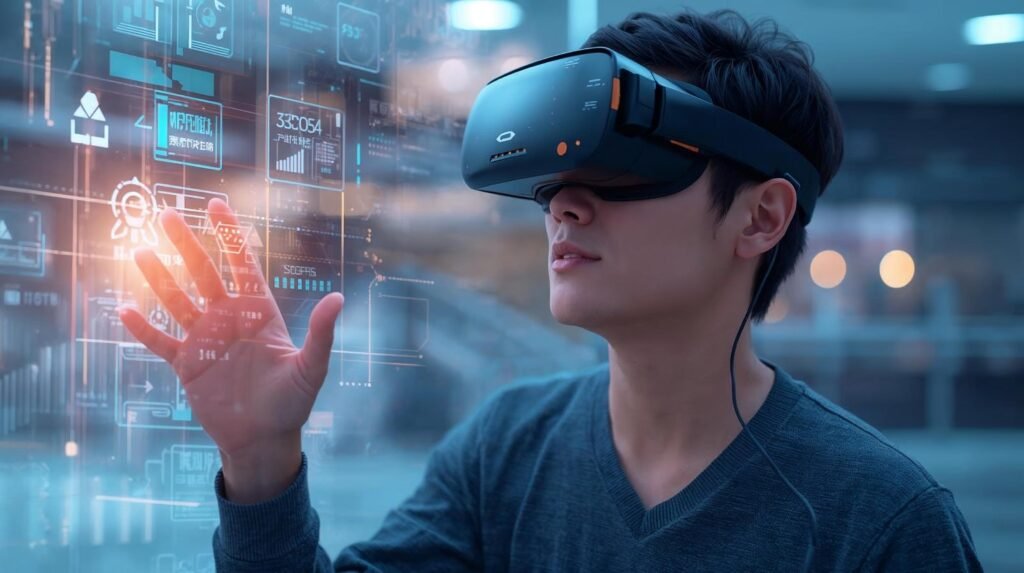
Spatial computing aims to blend digital experiences seamlessly into the physical world.
For more than a decade, the smartphone has been the centre of digital life. It reshaped how people work, communicate, shop and entertain themselves, becoming the primary interface between humans and the internet. Now, a new question is gaining momentum across the technology industry: what comes next?
Increasingly, the answer points toward spatial computing — a blend of augmented reality, virtual reality and mixed reality that allows digital content to exist seamlessly within the physical world. Once dismissed as niche or experimental, immersive technology is edging closer to the mainstream, driven by major investments and rapid advances in hardware and software.
From Screens to Spaces
Spatial computing represents a shift away from flat screens toward three-dimensional digital experiences. Instead of interacting with apps confined to a phone or laptop, users engage with digital objects that appear anchored in real-world space.
This evolution changes not just how technology looks, but how it feels. Emails can float in front of a user, data visualisations can expand across a room, and collaboration can happen in shared virtual environments that feel tangible rather than abstract.
The idea is not to replace reality, but to enhance it.
Why Interest Is Growing Now
Immersive technology has existed for years, yet adoption remained limited. Headsets were bulky, content was scarce and use cases were unclear. That equation is now changing.
Advances in processing power, display technology and sensors have made AR, VR and MR devices more capable and more comfortable. At the same time, the rise of remote work, digital collaboration and AI-driven interfaces has created demand for richer, more intuitive ways to interact with information.
Spatial computing sits at the intersection of these trends, promising a computing experience that feels more natural and less constrained.
Big Tech Bets on Immersion
Major technology companies see spatial computing as a potential successor to the smartphone era. Their vision goes beyond gaming or entertainment, focusing instead on productivity, communication and everyday computing.
The emphasis is on blending digital tools into physical environments rather than pulling users out of reality. Virtual workspaces, immersive design tools and spatial collaboration platforms are positioned as ways to reduce friction between people and technology.
While consumer adoption will take time, enterprise interest is already growing, particularly in sectors such as design, healthcare, education and advanced manufacturing.
The Metaverse, Reimagined
Much of the conversation around immersive tech has been shaped by the idea of the metaverse — a persistent digital world where people work, socialise and transact. Early hype often focused on virtual worlds disconnected from everyday life, leading to scepticism.
Spatial computing reframes the concept. Instead of escaping into virtual environments, users remain grounded in the physical world, with digital layers added where they are most useful. This more practical approach may prove critical to long-term adoption.
Challenges That Remain
Despite progress, significant hurdles remain. Hardware is still expensive, content ecosystems are immature and questions around privacy, health and social impact are unresolved. Wearing devices that constantly map physical surroundings raises concerns about data collection and surveillance.
There is also the question of behaviour. Smartphones succeeded because they fit easily into daily routines. For spatial computing to follow a similar path, it must prove that it adds value without adding friction.
A Glimpse of the Next Computing Era
The transition from smartphones to spatial computing will not happen overnight. Instead, it is likely to be gradual, with immersive features slowly integrating into existing devices and workflows.
Yet the direction is clear. As digital and physical worlds continue to converge, spatial computing offers a glimpse of a future where technology feels less like something we look at — and more like something we live within.
Whether it ultimately replaces the smartphone or complements it, spatial computing is shaping up to be one of the most significant technological shifts of the coming decade.
Source
Editorial analysis based on current global reporting and industry discussions on spatial computing, immersive technology, and the evolving metaverse.