
 Uncategorized
 What Are the Best Cities for Entrepreneurs in 2026?
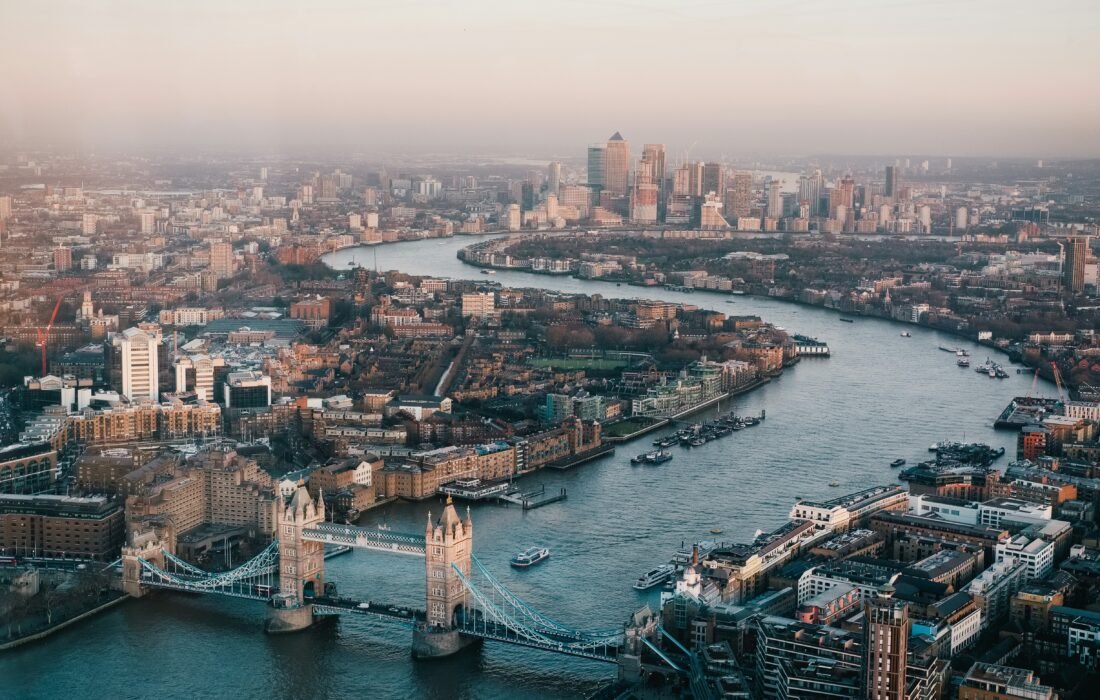
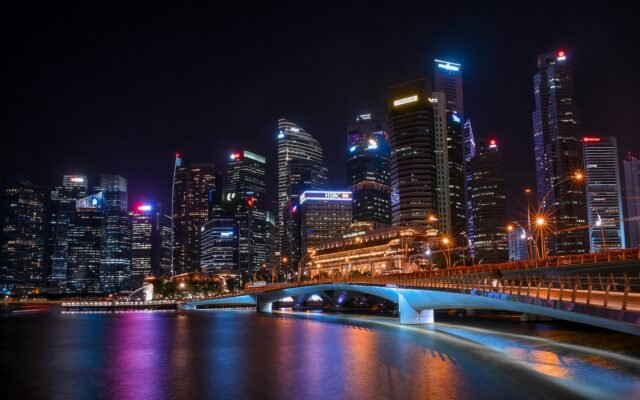
London built one of the world’s deepest entrepreneurial ecosystems. Singapore became Asia’s international business platform. Now Dubai is attracting companies, founders and private capital at remarkable speed. New data reveals how the competition for globally mobile entrepreneurs is changing.
For internationally mobile founders, investors and business owners deciding where to build their next company, three cities increasingly stand out: London, Dubai and Singapore. Each provides access to capital, talent and international markets, but new data on business formation, investment and wealth migration suggests they are developing distinctly different propositions for the next generation of entrepreneurs.
For decades, London and Singapore represented two of the clearest choices for founders building internationally. London combined access to capital and talent with world-class universities and one of the deepest financial and professional-services ecosystems anywhere in the world. Singapore constructed a different proposition around political stability, efficient regulation, international finance and a strategic position at the centre of Asian trade.
In 2026, however, a third city can no longer be treated as an outsider. Dubai has become a serious competitor for internationally mobile entrepreneurs, companies and private capital.
The change reflects something larger than the rise of one city. Founders can increasingly incorporate in one country, raise money in another, employ teams across several continents and sell to customers almost anywhere. Capital, technology and talent have become more internationally mobile, creating a new competition between cities that want not only companies, but the founders, investors and wealth surrounding them.
Three Cities, Three Powerful Business Engines
One way to understand the scale of the competition is through business formation. The latest available public data shows substantial entrepreneurial activity across all three cities, although differences in how each jurisdiction reports registrations mean the figures should not be treated as a direct ranking.
London recorded approximately 76,000 business births in 2024, according to the UK Office for National Statistics, giving the capital a 12.7% business birth rate — the highest of any UK region. Dubai Chamber of Commerce reported 71,830 new member companies during 2025, taking active membership to 292,486. Singapore, meanwhile, recorded 56,548 new business entities in the first eight months of 2026, equivalent to an average of roughly 7,069 new entities every month.
New Business Activity: London, Dubai and Singapore
Business hub | Latest new-business figure |
|---|---|
London — 2024 | ~76,000 |
Dubai — 2025 | 71,830 |
Singapore — Jan–Aug 2026 | 56,548 |
Sources: UK Office for National Statistics; Dubai Chamber of Commerce; Singapore Accounting and Corporate Regulatory Authority.
Data note: These statistics are not perfectly like-for-like. London measures business births, Dubai measures companies joining Dubai Chamber and Singapore measures new entity registrations. The reporting periods also differ. They are therefore indicators of the scale and momentum of entrepreneurial activity rather than a strict league table.
What the numbers do demonstrate is that London, Dubai and Singapore are all operating at considerable scale. What differentiates them is the type of entrepreneurial ecosystem each is building.
London: The Established Entrepreneurial Powerhouse
The narrative surrounding London has increasingly become dominated by taxation, wealthy residents leaving Britain and individual founders relocating overseas. The underlying business data tells a more complicated story.
Approximately 76,000 businesses were born in London during 2024, compared with roughly 61,000 business deaths, according to ONS data. That leaves a positive gap of around 15,000 businesses. London also recorded approximately 3,540 high-growth businesses and a high-growth rate of 6.6%, with professional, scientific and technical businesses playing an important role in new company formation.
Those numbers matter because London’s greatest advantages cannot easily be recreated through favourable tax policy alone. The city contains an extraordinary concentration of banks, venture investors, lawyers, accountants, universities, engineers, consultants, multinational companies and potential corporate customers. A founder raising institutional capital, selling into financial services or recruiting highly specialised talent can potentially access much of that ecosystem within a few miles.
London’s position in the global startup economy reinforces the point. Startup Genome’s Global Startup Ecosystem Report 2026 places London third globally, while valuing its startup ecosystem at approximately $438 billion. The city has 72 active unicorns, according to the research, while London’s AI-native ecosystem alone has reached an estimated $26.3 billion in value.
The important question is therefore not whether London remains a major entrepreneurial centre — the evidence strongly suggests that it does. The question is whether its exceptional ecosystem continues to compensate for the financial and regulatory advantages being offered elsewhere to founders who are increasingly free to choose where they live and operate.
Dubai: From Regional Hub to Global Challenger
Dubai’s expansion is striking both for its speed and for the international composition of the companies arriving there.
The 71,830 companies that joined Dubai Chamber during 2025 helped push active membership close to 300,000. According to the Government of Dubai Media Office, active membership increased from 258,318 in 2024 to 292,486 in 2025, representing annual growth of 13.2%.
But arguably the more revealing statistic is where those businesses came from.
Where Dubai’s New Foreign Businesses Came From
Origin | New companies joining Dubai Chamber, 2025 |
|---|---|
India | 18,486 |
Pakistan | 9,138 |
Egypt | 5,043 |
United Kingdom | 2,733 |
China | 1,583 |
United States | 1,054 |
Source: Dubai Chamber of Commerce / Government of Dubai Media Office.
These numbers complicate the popular narrative that Dubai’s rise is principally the story of wealthy Britons relocating for lower taxes. The city’s entrepreneurial population is being assembled from multiple major economies simultaneously. India alone contributed almost 18,500 new Chamber members in a single year, Pakistan more than 9,000 and Egypt more than 5,000. The UK added another 2,733, alongside significant numbers from China and the United States.
Dubai is consequently developing into something more interesting than a low-tax alternative to London: a meeting point between European capital, South Asian entrepreneurship, Middle Eastern wealth and Asian trade.
Its financial infrastructure is expanding alongside that business population. Dubai International Financial Centre reported more than 10,000 active registered companies by the first half of 2026, a 30% increase year-on-year. Within DIFC, the number of AI, fintech and innovation businesses reached 1,933, up 39%, while the centre housed 1,134 regulated financial-services firms.
The venture-capital environment across the wider region is also strengthening. MAGNiTT reported that startup funding across MENA exceeded $3 billion in 2025, increasing 74% year-on-year, with the UAE and Saudi Arabia capturing much of that capital.
Dubai’s attraction, therefore, increasingly extends beyond taxation. Residency options, international aviation links, financial infrastructure, access to Gulf capital and a geographic position between Europe and Asia are combining to create an increasingly credible operating base for international businesses.
Singapore: Consistency at Scale
Singapore presents a different story again. If Dubai’s defining characteristic is acceleration, Singapore’s is institutionalised scale.
According to Singapore’s Accounting and Corporate Regulatory Authority, 56,548 new entities were registered during the first eight months of 2026. With the exception of February, registrations remained remarkably consistent at approximately 7,000 to 7,600 each month.
Singapore Business Registrations in 2026
Month | New entities |
|---|---|
January | 7,408 |
February | 5,416 |
March | 7,385 |
April | 7,275 |
May | 7,039 |
June | 7,196 |
July | 7,586 |
August | 7,243 |
Jan–Aug total | 56,548 |
Source: Singapore Accounting and Corporate Regulatory Authority.
By August, Singapore’s registry contained approximately 636,822 entities. Startup Genome ranks Singapore eighth globally and second in Asia, with an estimated startup ecosystem value of $177 billion, more than 4,500 technology startups and over 500 venture-capital firms.
Singapore’s appeal is therefore less about a sudden migration story than the result of decades spent constructing an environment around international trade, technology, finance and regional headquarters. For founders targeting Indonesia, Malaysia, Vietnam, Thailand and the wider Asia-Pacific economy, it provides something neither London nor Dubai can replicate exactly: a sophisticated international business environment embedded directly within one of the world’s most important growth regions.
Recent research suggests that entrepreneurs recognise this advantage. HSBC Private Bank’s Global Entrepreneurial Wealth Report 2026, based on research conducted by Ipsos among 3,288 wealthy entrepreneurs across 17 markets, found Singapore was the leading destination among entrepreneurs considering a new residency.
That finding provides an important counterweight to the extraordinary attention currently surrounding Dubai. Dubai may have momentum, but Singapore remains deeply attractive to globally mobile entrepreneurial wealth.
Follow the Businesses — Then Follow the Money
Business registrations tell only part of the story because entrepreneurs rarely move independently of capital. Successful founders create companies, employ people, invest in other startups, buy property, establish family offices and eventually become customers of private banks, asset managers and professional-services firms.
Private-wealth migration therefore provides another lens through which to examine the changing geography of entrepreneurship.
Henley & Partners and New World Wealth estimated the UAE would experience a net inflow of approximately 9,800 millionaires in 2025, compared with an estimated 1,600 for Singapore. Britain, by contrast, was estimated to experience a net outflow of 16,500.
Estimated Net Millionaire Migration, 2025
Market | Estimated net migration |
|---|---|
UAE | +9,800 |
Singapore | +1,600 |
UK | −16,500 |
Source: Henley & Partners Private Wealth Migration Report 2025.
These figures require an important qualification: they are private wealth-intelligence estimates rather than official government migration statistics. They should not be interpreted as a direct measurement of entrepreneurs relocating between London, Dubai and Singapore.
There is, however, separate evidence of movement among British business owners. Rathbones’ analysis of UK Companies House filings found that 5,940 owners of high-growth UK businesses changed their country of residence between January 2024 and January 2026, with the UAE, Spain and the United States among the most prominent destinations.
Placed alongside the 2,733 UK-owned companies joining Dubai Chamber in 2025, the figures provide stronger evidence that a meaningful UK-UAE entrepreneurial corridor is developing.
Tax Is Changing the Equation — But It Doesn’t Explain Everything
Tax inevitably plays a significant role in the comparison.
The UAE’s federal corporate-tax regime generally applies a 0% rate to taxable income up to AED375,000 and 9% above that threshold, subject to the country’s detailed rules and qualifying free-zone provisions. For internationally mobile individuals, the distinction can be more significant because the UAE does not impose a general personal income tax equivalent to those operating in Britain or Singapore.
Singapore’s headline corporate income-tax rate is 17%, although exemptions and incentives can materially reduce effective rates for qualifying companies. Resident personal income tax is progressive and reaches 24% at the highest rate.
Britain offers a fundamentally different proposition. Its attraction has historically centred on ecosystem quality rather than low taxation, with corporation tax currently structured around a 19% small-profits rate and a 25% main rate, with marginal relief applying between the relevant thresholds.
Yet reducing the movement of entrepreneurs to tax alone misses a larger structural change. A founder can increasingly establish a company in one jurisdiction, employ developers in another, raise capital from investors elsewhere and sell to customers globally. Once geography becomes optional, founders naturally begin comparing jurisdictions more aggressively.
That is why the competition is becoming about far more than tax rates. Residency, quality of life, regulation, access to investors, talent, market proximity, political stability, schools, aviation connectivity and long-term family considerations all become part of the founder’s calculation.
Three Cities, Three Different Entrepreneurial Propositions
What emerges from the data is not a straightforward ranking of London, Dubai and Singapore, but three increasingly distinct models.
London’s proposition is ecosystem depth. Its extraordinary concentration of finance, professional services, technology, universities, talent and corporate customers remains extremely difficult to reproduce. The approximately 76,000 businesses created in 2024 and its third-place position in Startup Genome’s global ranking demonstrate that London remains a formidable entrepreneurial centre.
Dubai’s proposition is international acceleration. More than 71,000 companies joined Dubai Chamber in 2025, active membership expanded 13.2%, DIFC passed 10,000 registered companies and the origins of new businesses reveal an unusually international entrepreneurial population. Its combination of taxation, residency, infrastructure, connectivity and increasingly deep pools of capital has transformed Dubai from somewhere international companies sell into into somewhere entrepreneurs can operate from.
Singapore’s proposition is institutional strength and Asian access. More than 56,000 entities were registered during the first eight months of 2026, its startup ecosystem is ranked eighth globally, and HSBC’s latest entrepreneur research indicates its continuing appeal to internationally mobile founders. For companies targeting Southeast Asia and the wider Asian economy, Singapore remains one of the world’s most sophisticated regional platforms.
The Geography of Entrepreneurship Is Changing
So, what are the best cities for entrepreneurs in 2026?
The numbers do not produce one universal answer. They reveal something more significant: the geography of entrepreneurship itself is becoming more distributed.
London continues to create businesses at enormous scale. Singapore continues to compound decades of investment in its international business ecosystem. Dubai is assembling an increasingly diverse population of companies, founders, investors and private capital at remarkable speed.
Twenty years ago, access to capital, international talent, sophisticated professional services and global customers was concentrated in a relatively small collection of Western financial centres. That concentration is weakening. The next generation of international companies may be incorporated in one city, financed through another, employ people across several countries and sell to customers on every continent.
There is even reason to question whether London and Dubai should always be viewed as competitors. UK-UAE trade reached approximately £25 billion in 2025, while thousands of British companies already operate in the Emirates. Increasing commercial integration could make it increasingly common for entrepreneurs to maintain relationships with both ecosystems rather than abandoning one for the other.
That may ultimately be the defining feature of the best cities for entrepreneurs in 2026. The advantage increasingly belongs not simply to the city with the lowest taxes or largest financial centre, but to the cities capable of connecting founders simultaneously to capital, talent, markets and the wider world.
For entrepreneurs, the question is therefore becoming less:
“Where is the world’s best place to start a business?”
And increasingly:
“Which global hub best fits the business — and the life — I want to build?”