
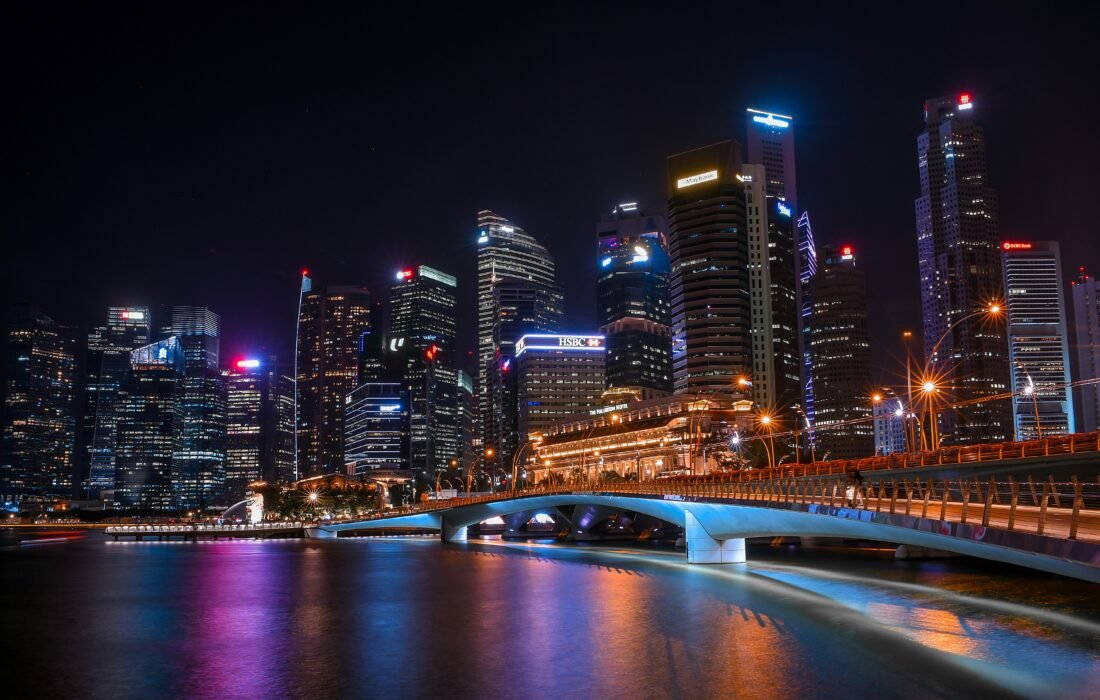
The Quiet Billionaire Shift is changing the geography of global wealth as the world’s richest families spread capital, family offices, investment portfolios and succession structures across a growing network of financial centres.
The Quiet Billionaire Shift is no longer simply a story about billionaires changing their country of residence. The more consequential development heading into 2027 is happening behind the scenes: wealthy families are becoming increasingly deliberate about where their assets are held, where investment decisions are made, where family offices are established and how exposure is divided between countries, currencies and asset classes.
The latest evidence suggests this is not a simple migration from one financial capital to another. Instead, a more distributed architecture of wealth is emerging.
On 22 September 2026, Citi Wealth released its 2026 Global Family Office Report, based on responses from 351 family offices across 41 countries. The survey found that 38% expect their families to become more global over the next five years. Many already have family members, businesses and investments spread across multiple jurisdictions, increasing the importance of cross-border tax coordination, regulatory compliance and asset structuring.
That finding goes to the heart of what is happening. The richest families are not necessarily choosing Dubai instead of Switzerland, Singapore instead of London, or the United States instead of Asia. Increasingly, they are using several of these centres simultaneously.
For governments, banks, asset managers and advisers, the stakes are enormous. The jurisdictions that capture the next generation of private wealth can also attract investment professionals, private banking activity, legal and accounting work, venture capital, real-estate investment, philanthropy and direct investment into local companies.
What the Quiet Billionaire Shift Actually Means
There is an important distinction between wealth migration and wealth allocation.
A billionaire may remain resident in one country while establishing a family office in another. A family business can remain headquartered in Europe while its owners build an investment platform in Singapore. A Middle Eastern family can bank in Switzerland, purchase American equities, make private-equity investments in India and use Dubai as the administrative centre for the next generation.
There is no comprehensive public database tracking every movement of billionaire capital across borders. Family offices are private by design, and individual asset movements are rarely disclosed. The most credible picture therefore comes from combining evidence: family-office surveys, official asset-management statistics, financial-centre registrations, wealth-management announcements, investment allocations and changes to cross-border structures.
The latest data points in the same direction. Citi found that almost half of surveyed family offices increased their public-equity exposure during 2026, while private markets remained an important portfolio pillar. Nearly 90% of respondents reported positive year-to-date portfolio performance, and 41% were targeting annual returns of between 7% and 10%. These are survey findings rather than guarantees of future returns, but they show that ultra-wealthy investors are not simply retreating into cash during geopolitical uncertainty.
Instead, capital is being repositioned.
Dubai Is Moving From Wealth Destination to Wealth Infrastructure
Dubai is one of the clearest examples of the Quiet Billionaire Shift because its proposition has evolved rapidly. The emirate has long attracted internationally mobile business owners and affluent residents. What is changing is the depth of the infrastructure being built around them.
On 27 July 2026, the Dubai Department of Economy and Tourism and Julius Baer announced a strategic agreement aimed specifically at international investors, business owners, ultra-high-net-worth clients and family offices considering establishing or expanding their presence in Dubai.
The release cited Dubai International Financial Centre data showing that DIFC contained 1,289 family-related entities at the end of 2025, a 61% annual increase. Families based in the centre had also created 1,115 foundations, up 66% year on year.
Those figures do not mean 1,289 billionaire families moved to Dubai in a single year. They measure family-related entities within DIFC, not physical migration. But they are strong evidence of growing institutional infrastructure around private wealth.
That distinction matters. A wealthy city is not automatically a global wealth-management centre. To become one, it needs lawyers, fiduciary specialists, private banks, investment managers, tax experts, fund administrators, governance structures and credible regulation.
Dubai is building precisely that ecosystem.
This is also why GEBM’s earlier analysis of where the world’s next billionaires may emerge identified the Gulf not only as a destination for existing wealth but as an increasingly important environment for creating new fortunes.
The opportunity is accompanied by risk. Geopolitical disruption across the Gulf has reinforced the value of diversification and contingency planning. GEBM’s analysis of the Strait of Hormuz supply-chain crisis illustrates why internationally mobile families increasingly treat geographic diversification as a resilience strategy rather than merely a tax decision.
Analysis: Heading into 2027, Dubai’s strongest advantage may not be that every wealthy family wants to move there permanently. It may be that enough families want Dubai to become one important node in a multi-country financial structure.
Singapore Is Deepening Its Position as Asia’s Wealth-Management Hub
Singapore provides some of the strongest official evidence of family-office expansion.
In an August 2026 parliamentary response, the Monetary Authority of Singapore said that more than 2,000 single-family offices were receiving relevant Singapore family-office fund tax incentives at the end of December 2025. MAS said the families originated predominantly from Asia-Pacific, followed by Europe and the Americas.
The wider asset-management industry is considerably larger. Singapore’s asset-management sector grew 10.1% in 2025 to S$6.7 trillion in assets under management, according to MAS.
And Singapore is not treating that position as secure.
On 19 August, MAS announced additional measures aimed at strengthening Singapore as an asset-management centre, including a proposed tax exemption for certain profit-related fund-management returns, a new hedge-fund investment programme and an Investment Management Track under the ONE Pass framework for senior global investment professionals.
The proposed tax measure is expected to begin from the 2027 year of assessment, subject to the detailed rules that will be announced.
The signal is clear: Singapore is competing not only for assets but for the people making investment decisions.
This makes the Quiet Billionaire Shift particularly relevant to Asia. The family office is increasingly becoming an institution in its own right, employing portfolio managers, analysts, lawyers and operations specialists rather than functioning simply as a private investment account.
For Singapore, the economic prize is therefore larger than private-bank deposits. It includes employment, investment-management activity, professional services and the possibility that global families deploy some of their capital into the domestic and regional economy.
Switzerland Shows Why Traditional Wealth Centres Still Matter
The rise of Dubai and Singapore does not mean established private-banking centres are disappearing.
Switzerland provides the clearest counterargument.
The Swiss Bankers Association’s 2026 Banking Barometer, published in August, reported that assets managed by banks in Switzerland reached CHF 9.729 trillion at the end of 2025, an increase of 4.8%.
During the first five months of 2026, the figure rose another 4% to CHF 10.1195 trillion. Assets belonging to both Swiss-resident and foreign-domiciled clients increased by 4% over that period.
The association attributes much of the increase to rising securities holdings, so these numbers should not be interpreted as CHF 390 billion of fresh money physically moving into Switzerland. Market appreciation matters.
Nevertheless, the scale demonstrates something important: cross-border wealth management in Switzerland remains enormous.
The emerging model therefore looks less like “Dubai replaces Switzerland” and more like functional specialisation. A family may value Switzerland for custody and wealth management while using Dubai for regional operations, Singapore for Asian investment exposure and the United States for public markets.
The Quiet Billionaire Shift is consequently strengthening some newer financial centres without automatically dismantling the older ones.
Hong Kong Is Fighting for a Larger Share of Family-Office Capital
Hong Kong remains another major part of Asia’s private-wealth landscape.
Official figures released by InvestHK earlier in 2026 put the number of single-family offices operating in Hong Kong at more than 3,380 at the end of 2025, approximately 680 more than two years earlier. InvestHK estimated that these offices contributed HK$12.6 billion annually to the local economy through operating expenditure and directly employed more than 10,000 professionals.
Those figures were published before the one-to-three-month primary research window used for most of this article, so they are included as contextual data rather than evidence of a new September development.
What is current is the continuing attempt to deepen Hong Kong’s private-market infrastructure. On 23 September 2026, InvestHK highlighted the expansion of institutional private-market platforms serving family offices in the territory, reflecting the broader competition to connect private wealth with private equity, venture capital and private credit.
That matters because the investment menu available to family offices is widening. GEBM’s analysis of the rise of private credit alongside traditional banking demonstrates how private capital has become a much larger part of the financing system.
For wealthy families, access to those markets can be as important as taxation or residency rules.
India Is Creating More Family Wealth — and More Institutional Family Offices
The global wealth map is changing not only because established fortunes are moving. New fortunes are also being created in different places.
On 20 August 2026, EY and Julius Baer published research on India’s family-office market. The Julius Baer–EY Indian Family Office Playbook estimated family-office assets at approximately INR700 billion in 2024 and projected them to grow 1.5 times over the following three years.
The report also found that family offices allocated approximately 40% to 45% of portfolios to alternative investments, including private equity, venture capital, private credit, alternative investment funds, REITs and infrastructure investment trusts.
EY and Julius Baer estimate that India could experience between US$1.3 trillion and US$1.5 trillion of intergenerational wealth transfer over the next decade.
That is a forecast, not an accomplished transfer, and should be interpreted accordingly. But it highlights a major structural force in private wealth: increasingly large pools of entrepreneurial capital are passing from founder generations to heirs who may have different geographic, technological and investment preferences.
This is one reason the next phase of wealth migration cannot be understood only through European or Middle Eastern tax policy. Asia’s own wealth creation is becoming large enough to reshape global family-office geography.
The Investment Shift Matters as Much as the Geographic Shift
Where wealthy families keep their offices is only half the story. Where they deploy their capital may be even more important.
Citi’s September survey found public equities had become the leading destination for new family-office capital during 2026, with nearly half of respondents increasing exposure. Private equity remained significant, while direct investing continued to attract interest.
The finding is notable because family offices have several structural advantages over many institutional investors. They can often invest over longer periods, accept illiquidity and make direct investments without the same redemption pressures faced by conventional funds.
RBC Wealth Management and Campden Wealth’s North America Family Office Report analysis published on 29 September 2026 adds another perspective. The research covered 155 single- and private multi-family offices with average family wealth of US$2.25 billion.
Among respondents, 44% expected to increase real-estate allocations over the next two to five years, 41% expected to increase developing-market equities and 37% expected to increase direct private-equity investments.
Importantly, RBC also found a gap between stated geographic intentions and actual allocations. Although respondents previously expressed interest in increasing exposure to Europe and Asia-Pacific, average US allocation subsequently rose from 68% to 80%.
That is a useful warning against interpreting surveys as guaranteed future capital flows.
Confirmed fact: family offices are discussing wider geographical diversification.
Confirmed fact: many remain heavily invested in US assets.
Analysis: billionaire wealth can become more geographically distributed at the level of residency, legal structures and operating offices without producing an equivalent retreat from US financial markets.
AI, Infrastructure and the New Billionaire Portfolio
Technology is another important destination for private capital.
RBC’s September research found that 59% of surveyed North American family offices identified artificial intelligence as their leading investment theme for the next 12 months, rising to 64% over a two-to-five-year horizon.
Citi, meanwhile, reported that family offices are deploying AI internally for investment analysis, information management, reporting, workflow automation and decision support.
The implications extend beyond software companies.
Artificial intelligence requires semiconductors, data centres, electricity, cooling infrastructure, fibre networks and increasingly large amounts of physical capital. GEBM’s research into the global AI infrastructure buildout shows how the investment opportunity is spreading from AI models into power generation, data-centre construction and the infrastructure surrounding computation.
This matters to family offices because private wealth increasingly competes with institutional capital in precisely these long-duration assets.
Gold and other defensive assets remain part of the conversation as well. GEBM’s analysis of gold’s role in institutional and corporate portfolios examines why geopolitical and currency uncertainty have pushed reserve diversification back onto investment committees.
The Quiet Billionaire Shift therefore has two dimensions: where the wealth is administered and what the wealth actually owns.
The World’s Richest Families Are Becoming Multi-Jurisdictional
Perhaps the most important number in Citi’s September report is not an asset-allocation percentage at all.
It is the finding that 38% of family offices expect their family to become more global over the next five years.
This means cross-border complexity is moving from an occasional issue to a permanent operating condition.
A modern global family may have:
- family members living in several countries;
- operating companies in different tax jurisdictions;
- investment vehicles domiciled elsewhere;
- private banks in multiple financial centres;
- property portfolios across continents;
- children studying and building careers internationally;
- philanthropic foundations with global mandates;
- public and private investments denominated in several currencies.
Managing that structure requires more than investment performance. It requires governance.
Citi reported that approximately one-third of respondents expect a leadership transition in their family, family office or family business within five years. Yet unclear succession plans, future-leader preparedness and disagreements over long-term vision remain challenges.
The next transfer of billionaire wealth may therefore trigger not only a change in ownership but a change in geography.
The heir to a European industrial fortune may already live in Singapore. A second-generation technology entrepreneur may prefer Dubai. An Asian business family may want greater US market exposure. A Gulf family may maintain regional headquarters while diversifying custody and residence rights internationally.
The Quiet Billionaire Shift is increasingly about optionality.
London Is Still Powerful — but the Competition Has Changed
London cannot be left out of this discussion.
The city retains one of the deepest concentrations of investment banks, lawyers, asset managers, private-equity firms, accountants, insurers and advisers anywhere in the world. That professional infrastructure does not disappear because other centres become more competitive.
But the UK has changed the tax framework applying to internationally mobile wealthy residents. HMRC guidance confirms that, from April 2025, the previous domicile-based framework relevant to non-UK domiciled individuals was replaced by a residence-based approach for key parts of the tax system.
Recent individual moves illustrate the competitive pressure but should not be mistaken for comprehensive migration statistics. On 18 September 2026, Bloomberg reported that Hasma Capital Advisors, which manages investments for members of Saudi Arabia’s Juffali family, was planning to move most of its staff from London to Dubai.
One relocation does not establish a global trend by itself. But combined with the rapid growth of family-office infrastructure in Dubai, Singapore and other hubs, it illustrates the choices now available to wealthy families.
London’s challenge is consequently not that it suddenly ceases to matter. It is that internationally mobile capital now has more credible alternatives.
This aligns with a broader transformation in international commerce examined in GEBM’s Global Business Trends 2026: companies, founders and investors are increasingly capable of operating through distributed global structures rather than tying every strategic function to one headquarters.
What Could Define the Quiet Billionaire Shift in 2027?
There is a limit to what current data can tell us about 2027. No credible institution can know today exactly how much billionaire capital will move between jurisdictions next year.
What can be identified are the structural forces already visible in late 2026.
- Family offices are becoming more international. Citi’s research shows a substantial share expect further globalisation of family structures.
- Singapore is actively competing for asset-management talent and capital. Its August policy measures are designed to deepen that ecosystem.
- Dubai is institutionalising its private-wealth proposition. The growth of DIFC family structures and its partnership with Julius Baer demonstrate that strategy.
- Switzerland remains a formidable cross-border wealth centre. Swiss bank assets under management crossed CHF10 trillion during the first five months of 2026.
- Asian wealth creation is becoming more important. India’s expanding family-office market illustrates how the source of global private wealth itself is changing.
- Capital allocation is becoming more selective. Public equities, private markets, AI, infrastructure and real estate all remain important, but liquidity and risk management are receiving greater attention.
- Succession will influence geography. As control passes between generations, location, governance and portfolio preferences may change with it.
Informed 2027 outlook: rather than producing one dominant new capital of global wealth, these forces are more likely to reinforce a network of specialised wealth centres. Dubai can gain family-office establishments while Switzerland retains custody assets. Singapore can gain Asian investment-management activity while American equities continue attracting large allocations. London can lose some internationally mobile structures while remaining a major centre for advisory, private equity and financial services.
That is a more nuanced story than a simple billionaire exodus — and probably a more consequential one.
Capital Is Becoming Borderless Before Families Do
The deepest lesson from the latest research is that personal migration and financial migration should not be treated as identical.
The world’s wealthiest families can internationalise their portfolios long before they change citizenship or permanent residence. They can open offices, appoint advisers, create foundations, diversify currencies and access private markets across borders while retaining meaningful ties to their existing home countries.
That is why looking only at millionaire migration rankings risks missing the larger transformation.
The real competition is for functions: custody, investment management, legal structuring, entrepreneurship, capital deployment, succession planning and the next generation.
Financial centres that can combine regulatory credibility, global connectivity, specialist talent, political predictability and access to investment opportunities will have an advantage. Taxation matters, but it is only one variable within a much larger decision.
The world is not watching a single river of money flow from West to East or from London to Dubai.
It is watching a global network of private capital become more sophisticated.
Conclusion: The Quiet Billionaire Shift Is Bigger Than Migration
The Quiet Billionaire Shift heading into 2027 is not fundamentally about where billionaires buy their next house. It is about where families choose to place investment teams, companies, trusts, foundations, custody relationships, private-market exposure and long-term decision-making.
Dubai’s family-office ecosystem is expanding. Singapore is deploying policy to attract more investment-management activity. Switzerland continues to manage record levels of assets. Asian family wealth is becoming more institutional. US markets remain deeply embedded in global portfolios. London retains formidable financial expertise even as competition for internationally mobile wealth intensifies.
The evidence does not support a simplistic claim that the world’s billionaires are all moving in one direction.
It supports something more interesting.
The richest families are building financial lives that span multiple jurisdictions, allocating different functions to different financial centres and preparing structures capable of surviving political, economic and generational change.
That is the Quiet Billionaire Shift — and it may become one of the defining stories of global private wealth in 2027.
Frequently Asked Questions
What is the Quiet Billionaire Shift?
The Quiet Billionaire Shift describes the growing tendency of ultra-wealthy families to distribute their investments, family offices, banking relationships, legal structures and family members across multiple jurisdictions rather than relying on a single financial centre. It does not imply that all billionaires are physically relocating.
Where are wealthy families moving their money in 2027?
Current 2026 evidence points to increasing importance for financial centres including Dubai, Singapore, Switzerland and Hong Kong, while the United States remains a major destination for investment capital. The evidence suggests diversification across several centres rather than a single destination.
Why are family offices moving to Dubai?
Dubai has expanded its financial, legal and family-office infrastructure. A July 2026 Julius Baer and Dubai Department of Economy and Tourism announcement cited 1,289 family-related entities in DIFC at the end of 2025, up 61% year on year. This measures entities rather than millionaire migration but demonstrates rapid ecosystem growth.
Why is Singapore attracting global family offices?
Singapore combines established financial markets, professional services, connectivity to Asian economies and targeted family-office and asset-management policies. MAS said in August 2026 that more than 2,000 single-family offices were receiving relevant fund tax incentives at the end of 2025.
Is Switzerland losing its position in global wealth management?
Current data does not support that conclusion. The Swiss Bankers Association reported CHF10.1195 trillion in assets under management at Swiss banks during the first five months of 2026, a new high. New wealth centres can expand without eliminating Switzerland’s role in cross-border banking and custody.
What is likely to matter most to billionaire families in 2027?
Based on current family-office research, important themes include geographic diversification, succession planning, liquidity, cross-border compliance, public equities, selective private-market exposure, AI and infrastructure. These are informed trends based on 2026 data rather than guaranteed predictions of how individual families will invest.